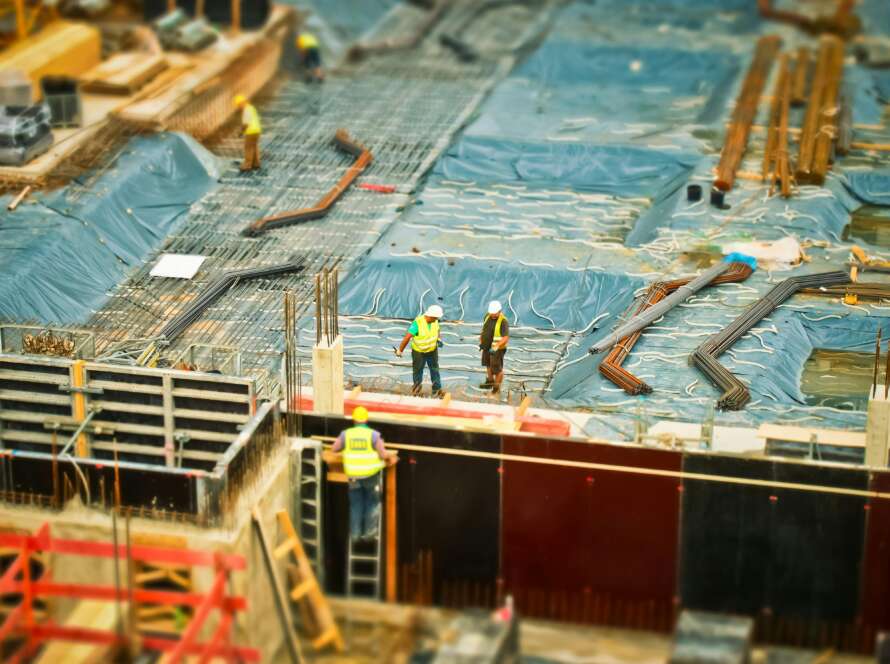
If you have set foot on a job site lately, you have probably felt it before you could name it something’s different. The tools have gotten smarter, the conversations have changed, and the pressures. They are still there, just wearing a new face. Construction in 2026 isn’t the industry it was five years ago, and it shows no signs of slowing down. let’s explore what is actually changing in construction right now—here’s an expert guide you probably haven’t read before.
AI Is No Longer a Buzzword on the Job Site
For years, “artificial intelligence” was something executives talked about in conference rooms while workers on the ground rolled their eyes. That gap is closing fast. AI is now doing real, practical work flagging potential delays before they snowball, keeping cost estimates honest, and watching out for safety hazards that a tired human eye might miss.
Think about what that actually means for a project manager juggling a hundred moving parts. Instead of reacting to problems after they’ve already cost time and money, teams are getting ahead of them. Most of construction leaders say they’re still optimistic about the industry’s future, and a lot of that confidence comes from finally seeing their digital investments pay off in tangible ways.
Robots Are Showing Up — and Staying
A few years back, construction robots were mostly a curiosity impressive at trade shows, rarely seen on actual sites. That’s changed. Robots are now laying bricks, moving heavy materials, and handling demolition work on live projects. The market has grown to over a billion dollars and is expected to reach more than eleven billion by 2040.
But here’s the thing this isn’t really about replacing people. The industry is facing a genuine workforce crisis. There simply aren’t enough skilled workers to meet demand, and the gap is widening every year as experienced tradespeople retire. Robots are stepping in to handle the most physically gruelling, repetitive work, freeing up skilled workers to focus on the judgment calls and quality decisions that actually require human expertise.
The Labour Shortage Is the Industry’s Biggest Headache
Nobody in construction is pretending otherwise. The numbers are stark the sector may need close to half a million new workers in 2026 alone, and a shortage of over two million skilled craft professionals is expected by 2028 if current trends hold.
Part of the problem is perception. Younger workers often don’t see the trades as a viable or attractive career path, even as wages and opportunities have improved significantly. Meanwhile, the experienced workforce is aging out faster than the next generation is stepping in. Companies are responding with apprenticeship programs, better training resources, and technology that makes existing teams more productive because at this point, every hire has to count for more.
BIM Isn’t Optional Anymore
Building Information Modelling used to be something progressive firms bragged about. Now it’s just the cost of entry. About 65% of construction projects worldwide are using BIM workflows, and nearly 88% of industry professionals either already use it or are planning to. If you’re not working this way, you’re increasingly out of step with where the market expects you to be.
What makes BIM genuinely valuable isn’t the technology itself it’s what it prevents. Identify a clash between structural and mechanical systems on a screen before construction starts is infinitely cheaper than discovering it mid-build. And when you layer in AI and live project data, you end up with something much stronger and keeps learning and improving throughout the entire life of a building.
Factory-Built Construction Is Having Its Moment
Modular and prefabricated construction has been “the next big thing” for a while, but in 2026, it’s actually delivering. More firms are deliberately moving work off-site, building components in controlled factory environments where quality is consistent, weather isn’t a factor, and timelines are far more predictable.
The economics are compelling. When you can manufacture building components at the same time as site preparation is underway, you compress schedules in ways that traditional sequencing simply can’t match. The global market for modular construction is heading toward $155 billion by 2033, and the sectors leading the charge residential, hospitality, commercial are the ones that benefit most from standardized, repeatable systems.
Sustainability Is Now a Business Requirement
Buildings and construction account for somewhere between 37 and 39% of global energy-related carbon emissions. That’s not a statistic that’s easy to look past, and increasingly, neither clients nor investors are willing to. Sustainability has moved from being a nice addition to a project brief into a requirement that can determine whether a firm wins a bid or secures financing at all.
Green materials, low-carbon concrete, energy-efficient design these aren’t luxury features anymore. They’re becoming standard line items in project planning. Firms with strong environmental and governance practices are finding real advantages in the market, not just in reputation, but in the actual business of winning work.
Data Centres Are Keeping the Industry Busy
While some parts of construction have felt the effects of economic uncertainty, one sector is absolutely booming data centres. Tech companies are floods billions into digital infrastructure, and that’s generating a sustained wave of big projects that shows no signs of slowing. Alongside that, there’s meaningful activity in semiconductor plants, defence facilities, and public infrastructure upgrades that were funded years ago and are now moving into architecture. For firms with the right specializations, this is a significant window of opportunity and it’s expected to continue well past 2026.
Buildings That Think for Themselves
Sensors throughout a building feed continuous data back into its digital model, giving teams an ongoing picture of energy use, structural health, and environmental situations. Problems identified early. Maintenance gets observed rather than reactive. Buildings actually perform better over their lifetime. When this connects with BIM data and AI analysis, you end up with something genuinely new a construction and facilities ecosystem where decisions are based on what’s actually happening, not what someone estimates might be happening.
So Where Does That Leave Us?
The construction industry is being pushed in a lot of directions at once build faster, spend less, pollute less, do it all with fewer workers. That’s a genuinely difficult set of pressures to manage at once.
The firms doing it well tend to share a few things they’ve made meaningful investments in digital tools, they make decisions based on data rather than habit, and they’ve built teams that are willing to keep learning. The technology exists. The market signals are about as clear as they get. The only real question left is how fast each firm is willing to move.
Our experts build construction using latest construction trends. For more information stay tuned with our Building contractors in chennai.